Locks explained
Deadbolts in the UK: What the Term Means
In the UK, "deadbolt" usually means the bolt of a mortice deadlock, or any key-worked bolt with no latch. The American-style deadbolt, fitted through a round hole in the door face, is less common here. On timber doors the lock insurers look for is a BS 3621 mortice deadlock, at £100 to £205 fitted (MLA price list, Checkatrade, MyJobQuote and Bark).
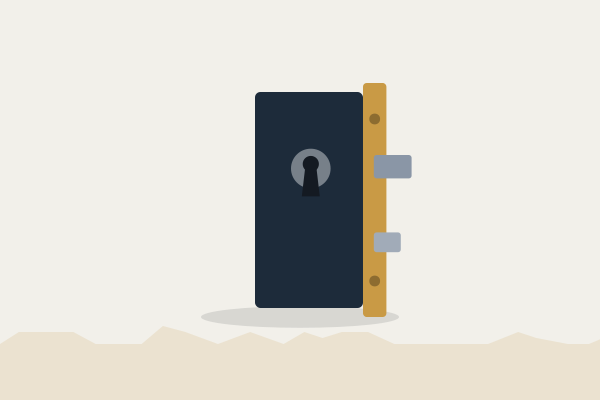
What does deadbolt mean in the UK?
A deadbolt is any bolt that can only be moved by a key or a thumb turn, not by pushing on it. In British usage the word mostly describes the part, the square bolt that a mortice deadlock throws into the frame, rather than a separate lock. Deadlock and deadbolt are used loosely for each other, and so are "mortice" and "mortise". When people in the UK search for a deadbolt for a front door, the lock they usually need is a mortice deadlock, or the deadbolt built into the multipoint strip of a uPVC door.
How is an American-style deadbolt different?
In North American homes a deadbolt is a separate lock fitted through a round hole bored in the door face, with a cylinder outside and a key or thumb turn inside. These are sometimes called tubular deadbolts. They are sold in the UK and turn up on some imported and modern doors, but they are not the type British insurance wording grew up around. Unless a product states that it meets BS 3621, it may not satisfy an insurer that names that standard, so check the marking before relying on one as a front door's main lock.
Which standard should a deadbolt meet?
For a key-worked deadbolt on a timber external door, the standard is BS 3621, with BS 8621 or BS 10621 where people must be able to get out without a key. Look for the Kitemark and the number on the faceplate. On uPVC and composite doors the deadbolt is part of the multipoint mechanism, and the grade that matters is the cylinder's: TS 007 3 star or Sold Secure SS 312 Diamond. Bolts that are not key-operated, such as barrel or tower bolts, add strength from inside but carry no lock standard.
How can you tell what deadbolt you have?
Close the door and look for the bolt. If a key throws a solid square bolt from the edge of a timber door and that lock has no handle, it is a mortice deadlock. A round cylinder on the door face, a short round bolt and a round strike plate on the frame point to a tubular deadbolt. On a uPVC door, the deadbolt is the central bolt on the multipoint strip that comes out when you turn the key. The faceplate stamp, where there is one, settles which standard applies.
What does fitting cost, and when should you call a locksmith?
A BS 3621 mortice deadlock costs £100 to £205 fitted (MLA price list, Checkatrade, MyJobQuote and Bark). A tubular deadbolt has no separate sourced figure and is charged by time, at £65 to £85 an hour in the daytime (MLA price list, Checkatrade and Bark). Call a locksmith if the bolt will not throw fully, which can leave the door unlocked without you knowing, if a lock must meet an insurer's condition, or after a break-in has damaged the frame or keep. Ask for the standard to be written on the invoice.
Common questions
Is a deadbolt the same as a deadlock?
In everyday UK use, nearly. A deadlock is the lock and the deadbolt is its bolt, but people use the two words for each other. Either way, for a timber front door ask for BS 3621.
Do UK insurers accept American-style deadbolts?
Policies usually name BS 3621 for timber doors. If a tubular deadbolt is not marked to that standard, ask your insurer before relying on it as the main lock on a final exit door.
Does a uPVC door have a deadbolt?
Most multipoint mechanisms include one: a central bolt thrown by the key alongside hooks or rollers. Its strength depends on the cylinder, so check for TS 007 3 star or SS 312 Diamond.