Locks explained
Internal Door Locks: Bathroom, Bedroom and Office
Internal door locks are for privacy, not security. Bathrooms usually take a thumb turn lock with an emergency release outside; bedrooms and offices a mortice sashlock or a euro cylinder with a thumb turn inside. In shared houses, locks on escape routes must open from inside without a key. Fitting is charged by time, at £65 to £85 an hour (MLA price list, Checkatrade and Bark).
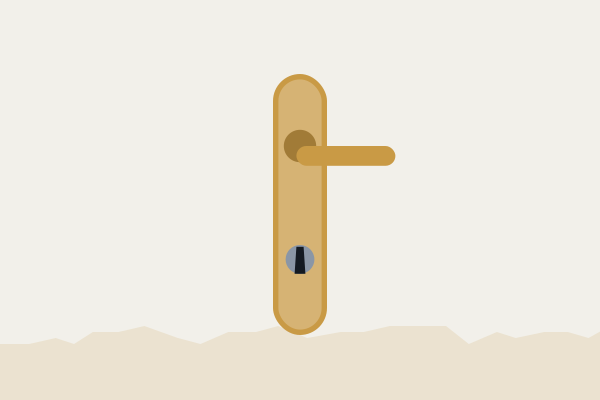
What locks are used on internal doors?
- Bathroom lock: a mortice bathroom lock worked by a thumb turn inside, with a release on the outside that opens with a coin or screwdriver in an emergency. An indicator often shows red or white. - Mortice latch: a handle-only latch with no lock, the default on most internal doors. - Mortice sashlock or deadlock: a lever-key lock, used on bedroom, study and office doors. - Euro cylinder sashlock: a keyed cylinder outside and a thumb turn inside, common in shared houses and offices.
Handles with a lock built in, sold as lockable door handles or knobs, are mostly privacy locks of the bathroom type.
Which locks suit bedrooms in a shared house?
Rooms let to separate tenants usually need a lock the tenant can secure from outside with a key while still opening it from inside without one. The LACORS fire safety guide for houses in multiple occupation, which councils use, says doors on escape routes, including bedroom doors and the final exit, should open from inside without a key. In practice that means a thumb turn on the room side. A mortice deadlock that needs a key on both sides is the wrong choice here. Landlords should also check their council's licensing conditions, which often set out the lock required.
Is there a standard for internal door locks?
Most internal doors have no security grade expected of them, and BS 3621 is aimed at doors that keep burglars out. For keyless exit, BS 8621 describes a lock that can always be opened from inside without a key, and some landlords specify it for room doors. Fire doors carry their own fire certification, and a lock fitted to one should not reduce that rating, so use hardware the door's maker or certifier allows. Bathroom locks are judged mostly on how easily they release from outside in an emergency.
How can you tell what internal lock you have?
Open the door and look at the edge. One latch and no keyhole means a plain mortice latch. A latch with a square hole below for a thumb turn spindle, and a slot or turn on the outside face, is a bathroom lock. A round lever keyhole points to a mortice sashlock; a pear-shaped hole with a cylinder in it is a euro sashlock. Note the case size and the distance from the edge to the handle spindle before ordering a replacement, because internal locks come in several depths.
What does fitting cost, and when should you call a locksmith?
No separate sourced figure exists for internal locks, so the guide is the hourly rate: £65 to £85 an hour in the daytime (MLA price list, Checkatrade and Bark). Swapping a lock into an existing cut-out is quick; cutting a new mortice into a door that only had a latch takes longer. Call a locksmith when someone is stuck behind a bathroom lock that will not release, when a landlord needs every room keyed differently with one master key for the owner, or when a fire door needs a lock that keeps its rating. A master key system can be designed so each tenant's key opens only their own room.
Common questions
Can you open a bathroom lock from outside?
Most bathroom locks have an emergency release on the outside face, a slot that turns with a coin or screwdriver. If the release is missing or seized, a locksmith can usually open the door without damage.
Can a landlord fit locks on bedroom doors in a shared house?
Yes, and many licensing conditions expect it. The lock must open from inside without a key, usually by a thumb turn, so tenants can get out quickly in a fire.
Do internal doors need BS 3621 locks?
No. BS 3621 is aimed at doors that face burglary. Internal doors need privacy or keyless exit; in shared houses, check the council's licensing conditions for any lock it names.